Enji.ai
2024 – 2026
A delivery intelligence platform for remote and hybrid teams. Combines AI agent, real-time dashboards, and cost transparency to turn raw project data into actionable decisions — without manual reporting or excessive meetings.
Users include project managers, delivery managers, HR specialists, product owners, and C-level stakeholders.
B2B Saas
Startup
AI Product design
Product thinking
UX strategy
Information architecture
UI Design
Design systems
Hallway testing
Design review
Problem
The platform was built around dense data tables — functional, but cognitively exhausting. Users couldn't quickly assess project health, understand where time was going, or take action without significant mental effort. Onboarding required a dedicated person to guide every new client through the system, and even then, retention suffered.
The issue wasn't just that the interface was visually monotonous. It was that users couldn't understand what the product was for — or how to make it work for them. The problem wasn't aesthetics. It was meaning.
Approach
Designed interfaces for fast scanning, not deep reading.
Signal over noise — prioritize deviations and anomalies over full datasets. A red flag should be visible in 3 seconds, not after scrolling through a table.
Systematic consistency — build a foundation that scales, not just one-off screens.
Research input came from hallway testing sessions — quick structured conversations with real users to validate direction and surface pain points early, without slowing down delivery.
Key work
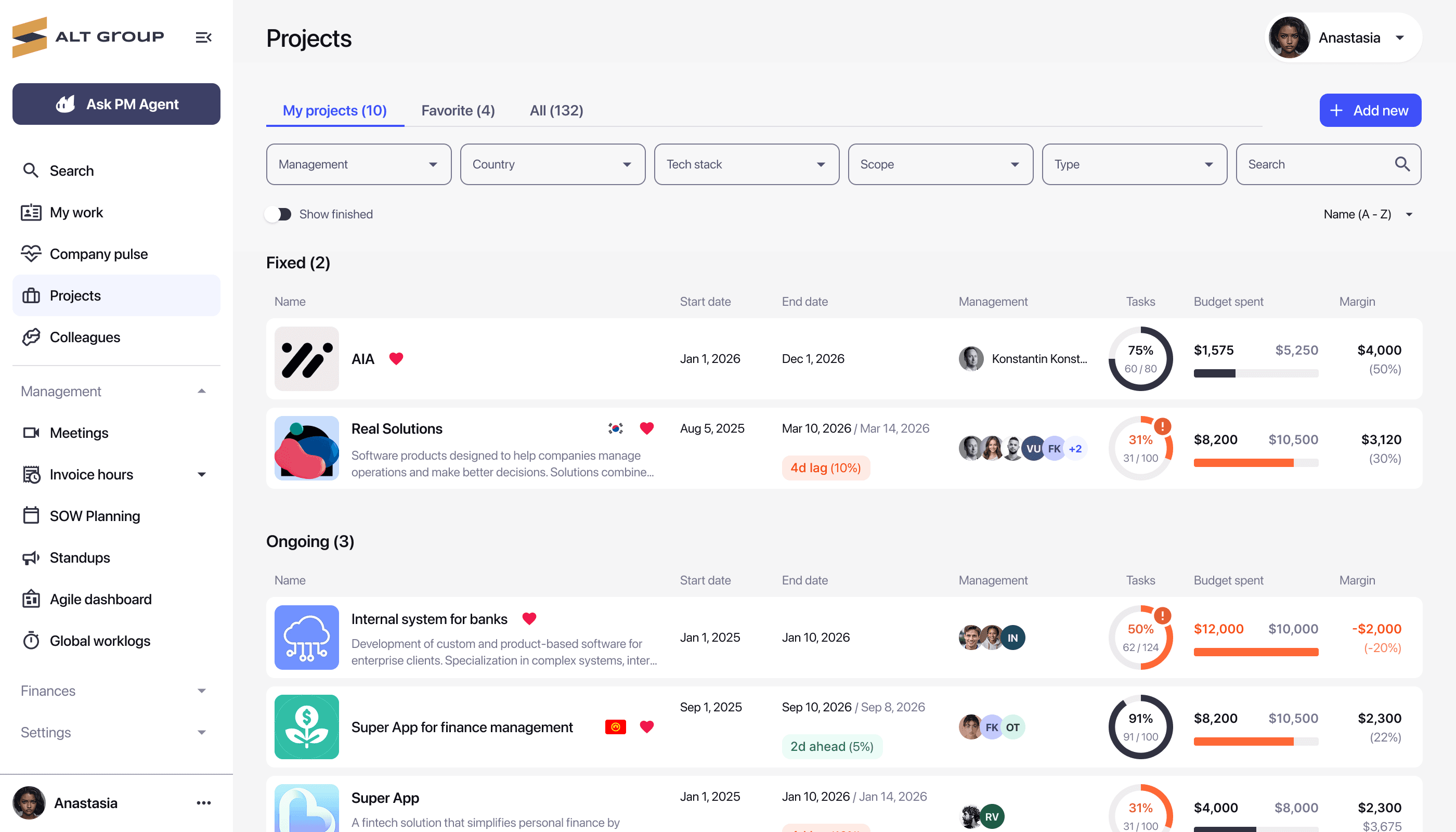
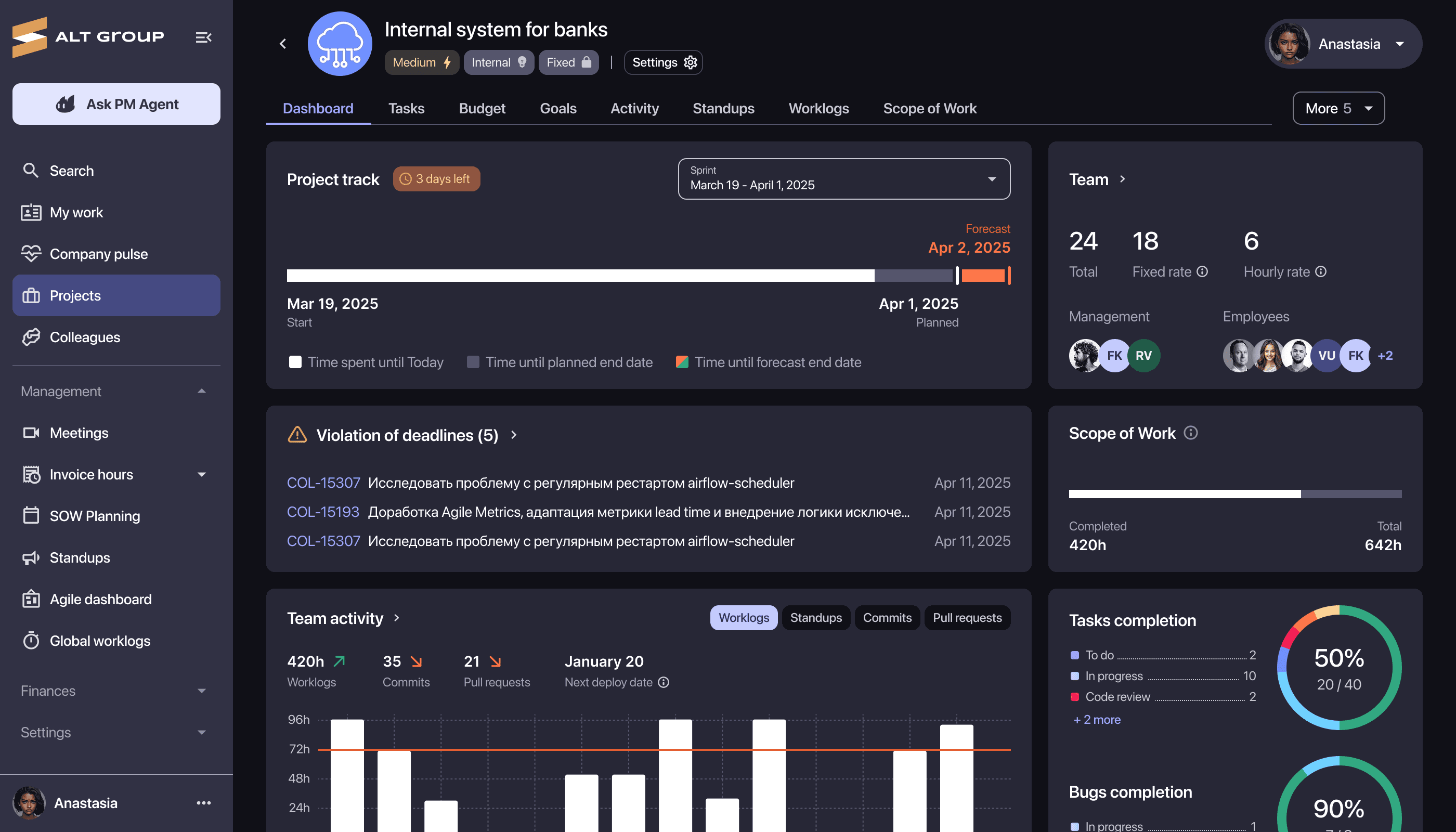
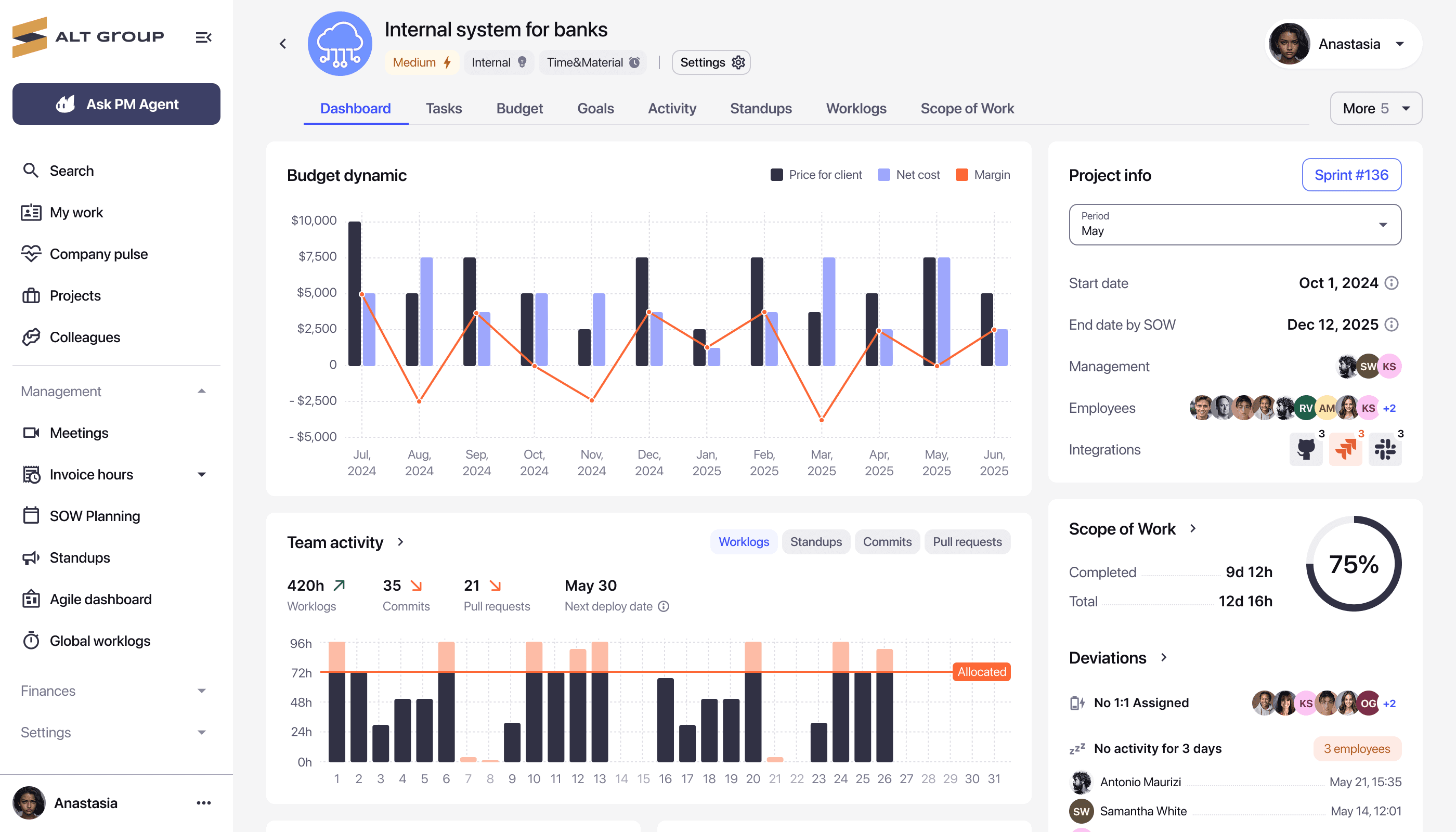
Decision-oriented dashboards
Replaced dense data tables with structured, role-adapted dashboards for Fixed, Ongoing, and T&M project types. Managers can now assess project health at a glance — budget consumption, scope progress, and delivery status are visible without manual analysis. Deviations surface automatically; details are available on drill-down.
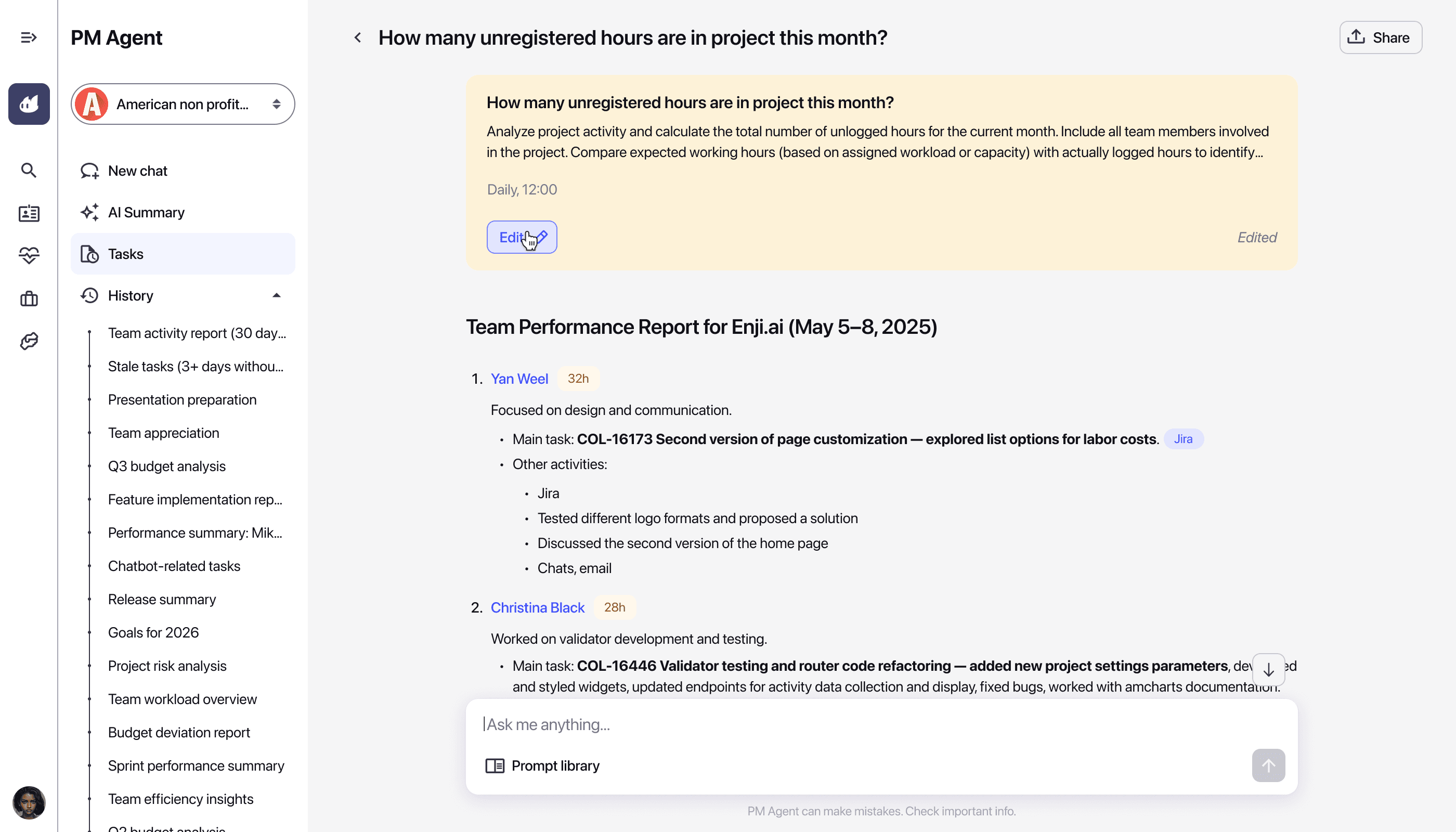
AI Agent redesign
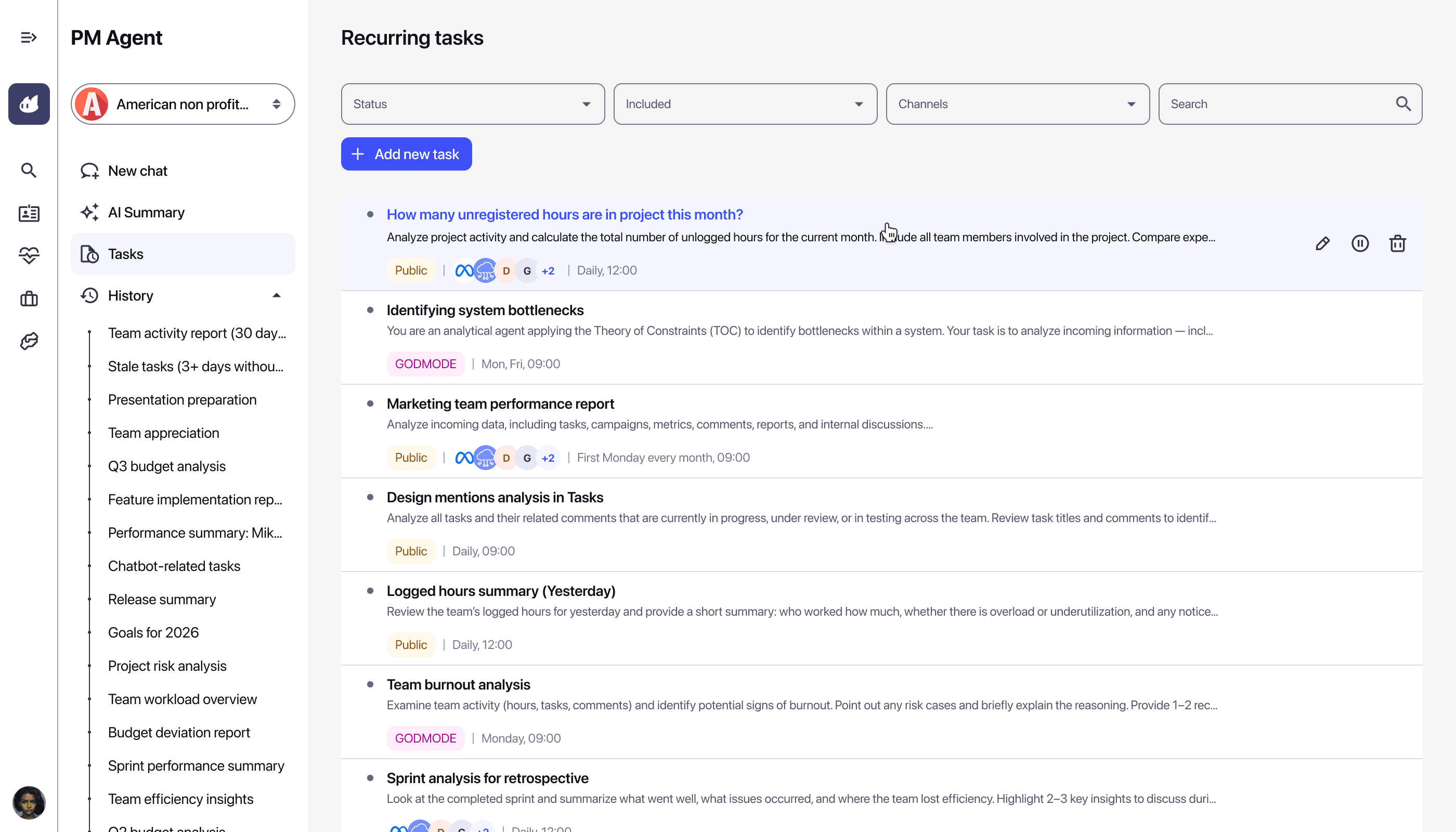
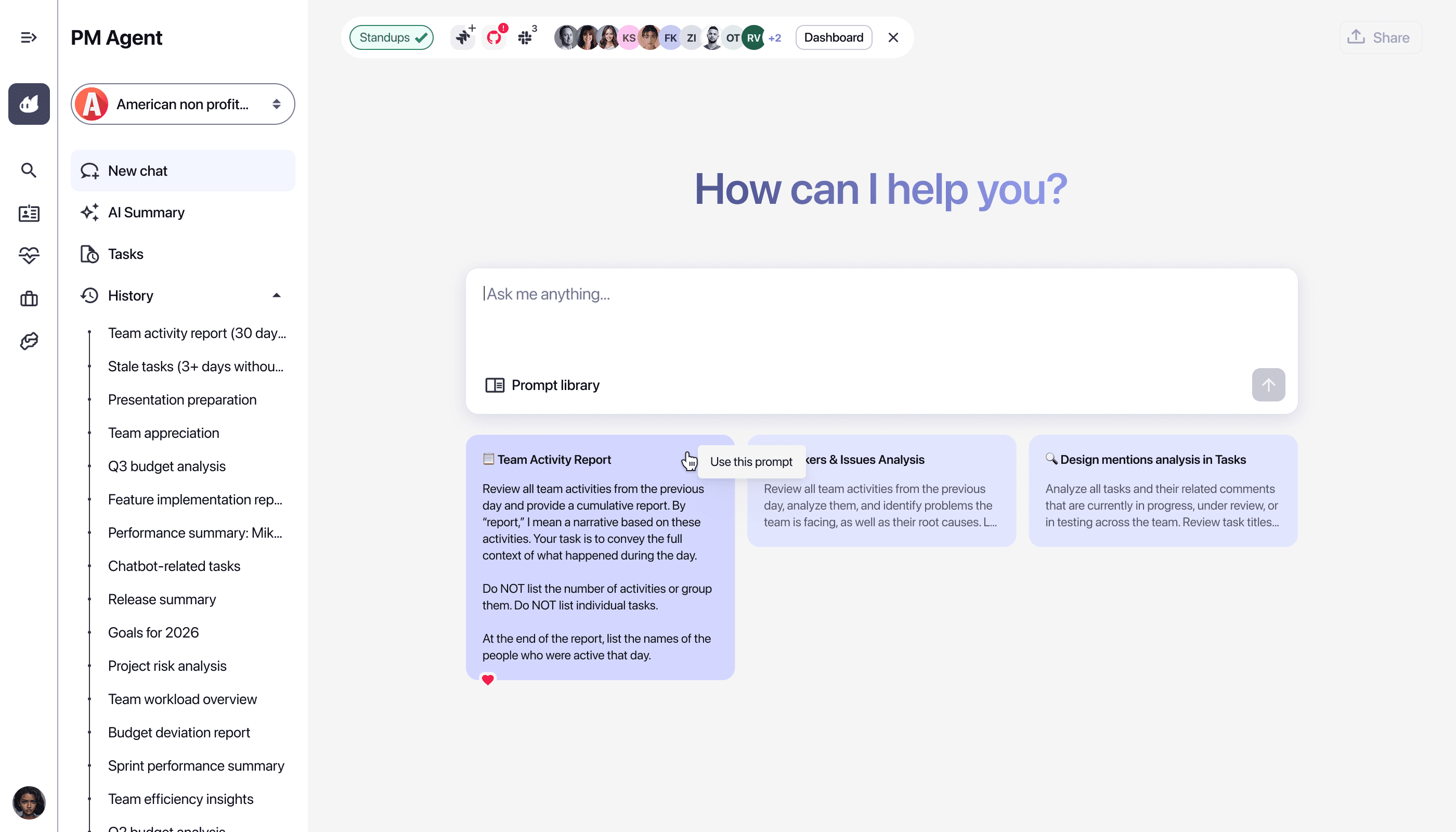
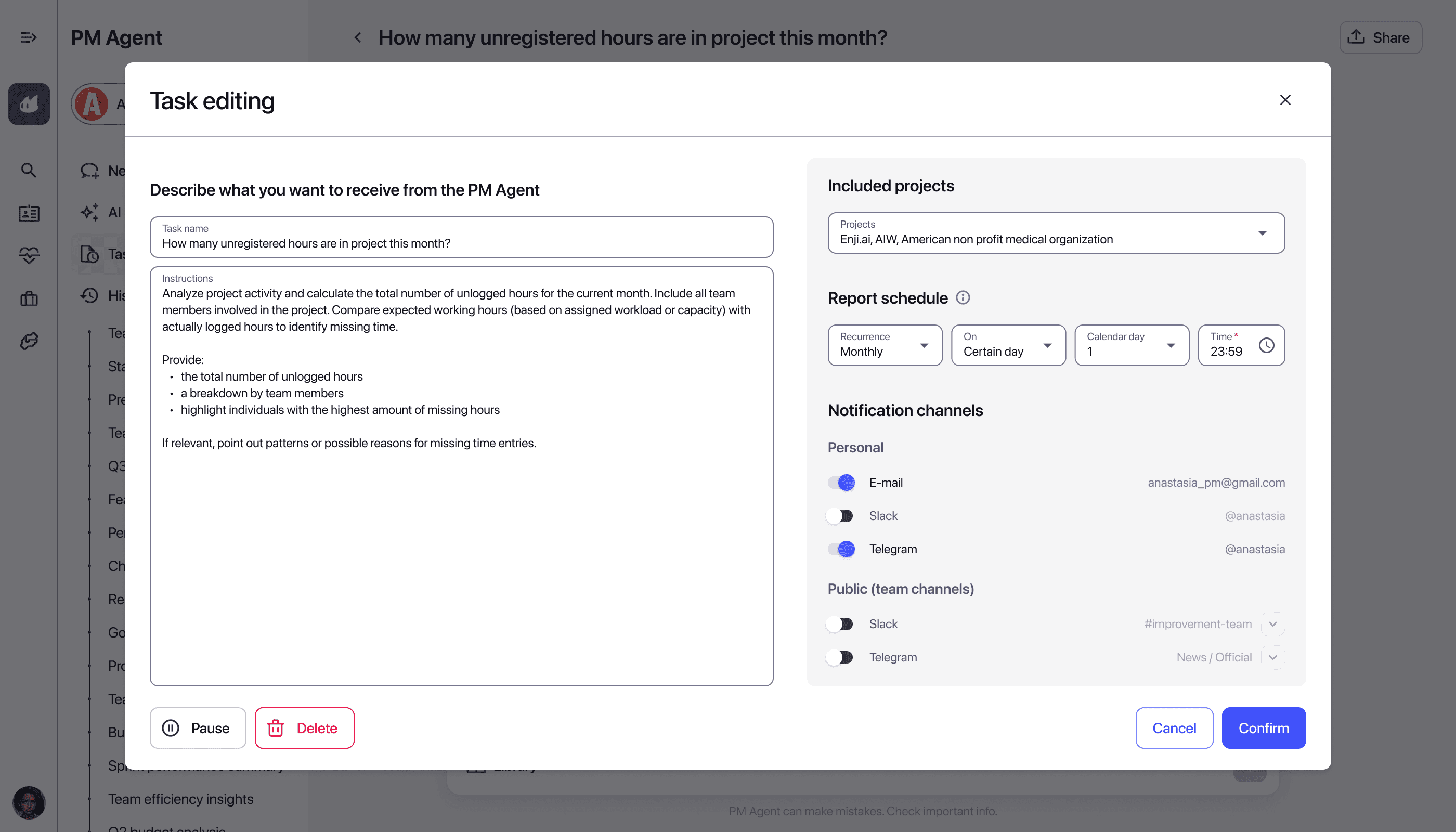
Replaced a small chat widget — the kind you'd expect in an e-commerce support flow — with a full internal tool. The agent now generates analytical reports with charts and tables, supports scheduled insights at custom intervals, and includes a shared prompt library so less experienced users can get started without friction. AI shifted from a support feature to a decision-making tool.
Employee activity insights
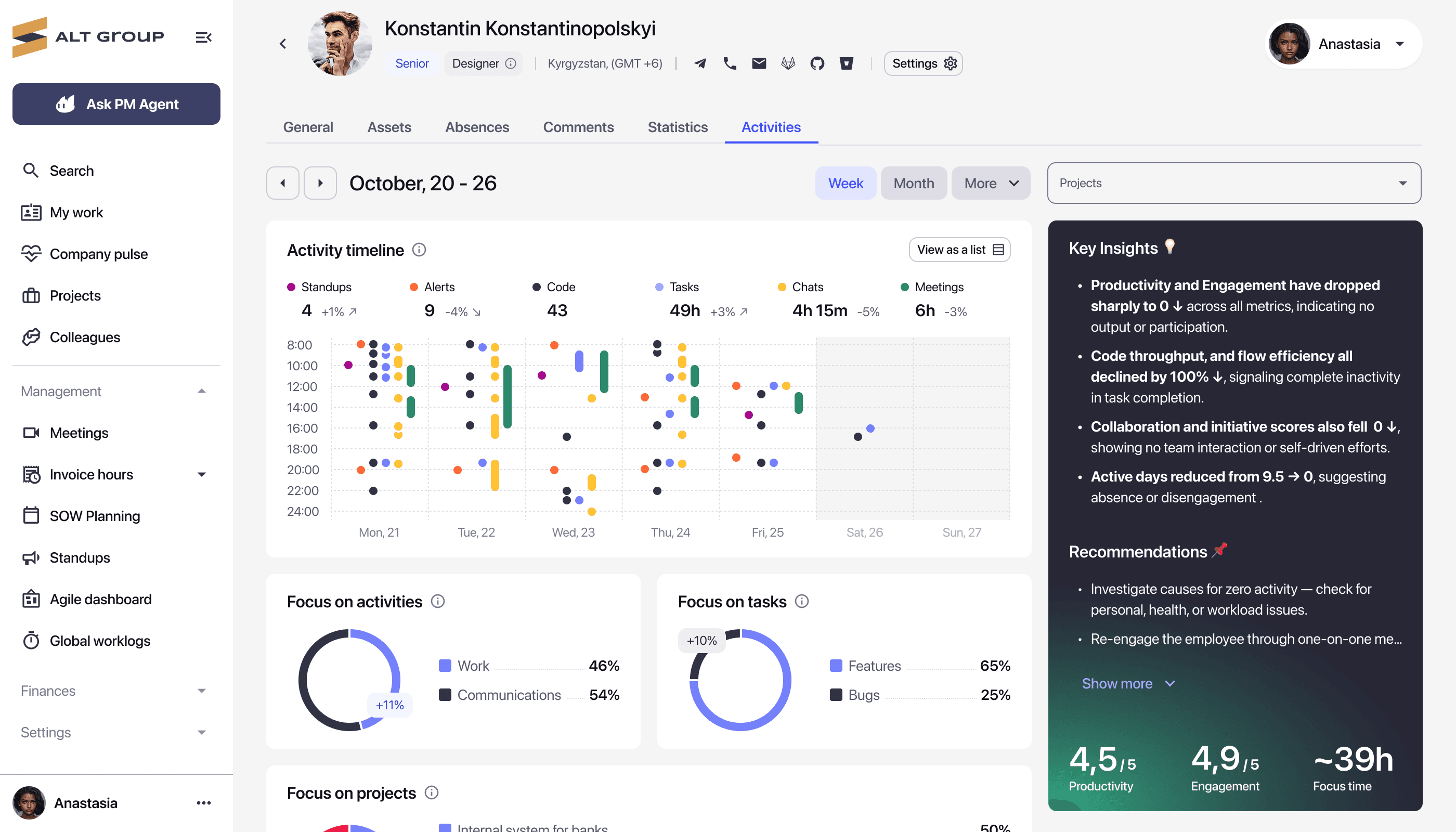
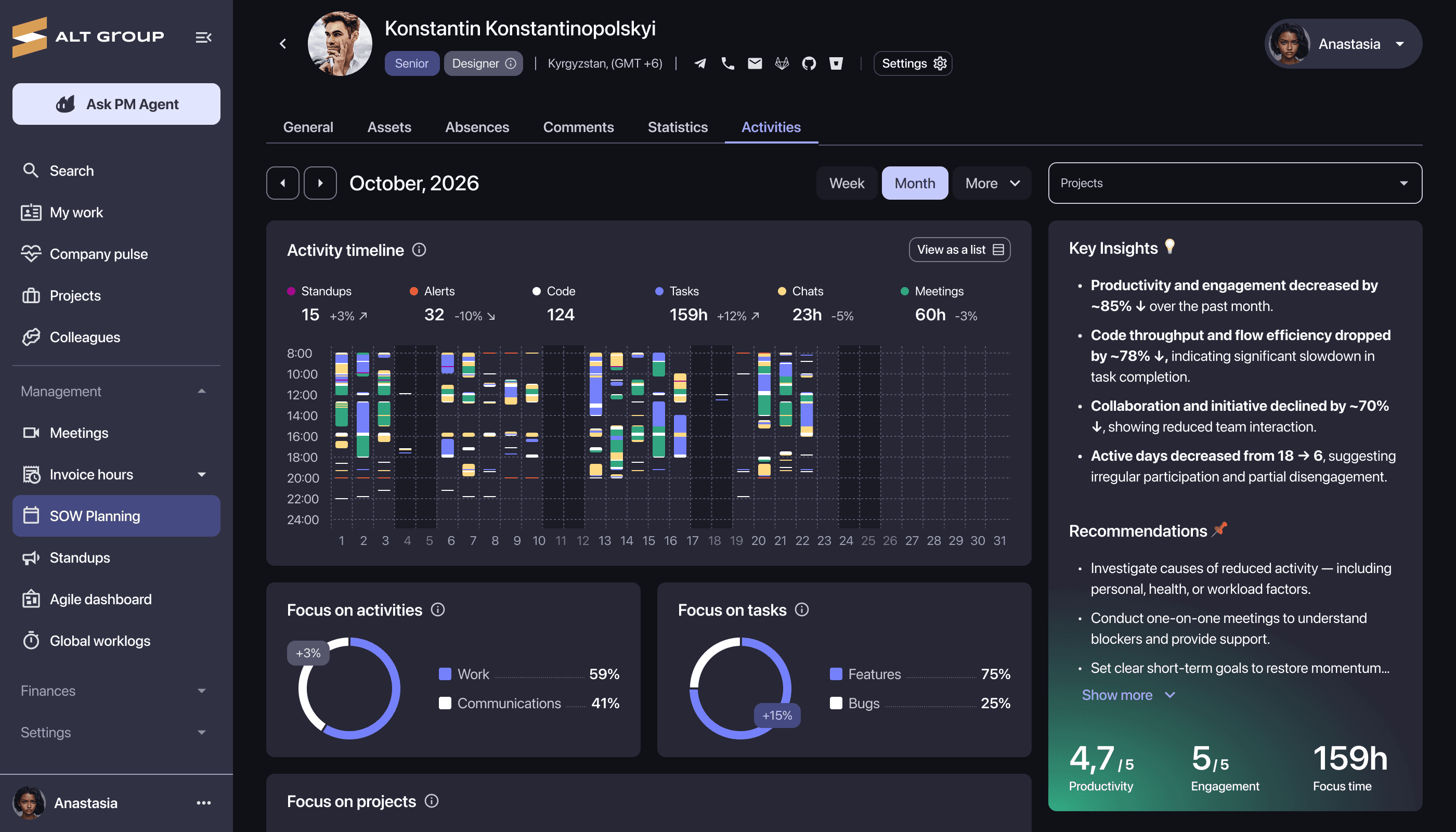
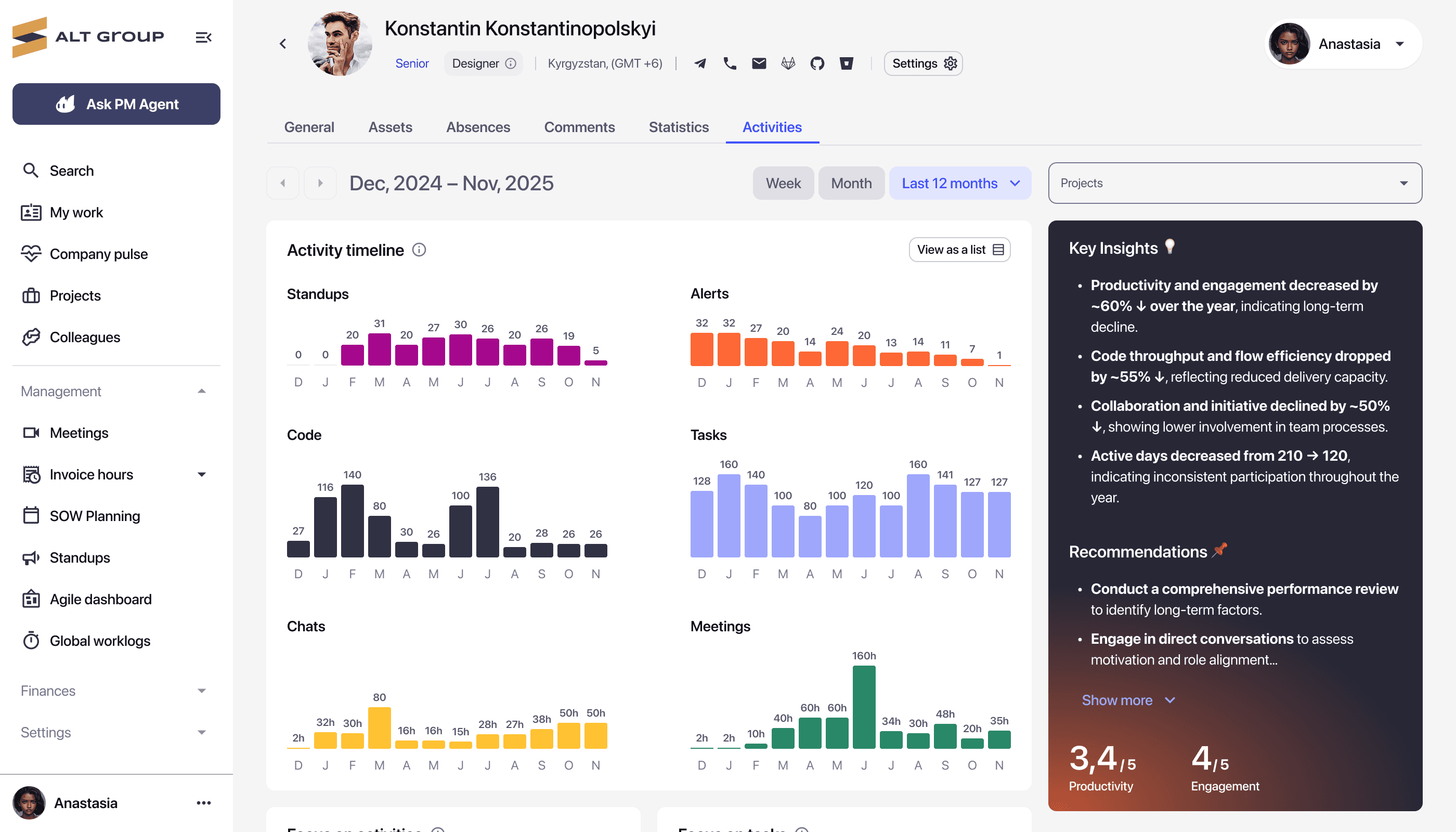
Designed a deep-dive view of how individuals and teams actually spend their time — broken down by work type, project, and task category. Metrics adapt to role: development vs. communication time for engineers, meetings vs. documentation for managers. A detailed list view allows drill-down into any activity for anomaly investigation or reporting. Helps managers spot overload and inefficiencies before they become problems.
Operational improvements
Replaced an external Google Form with a built-in absence request and approval flow, synced with Google Calendar and Jira.
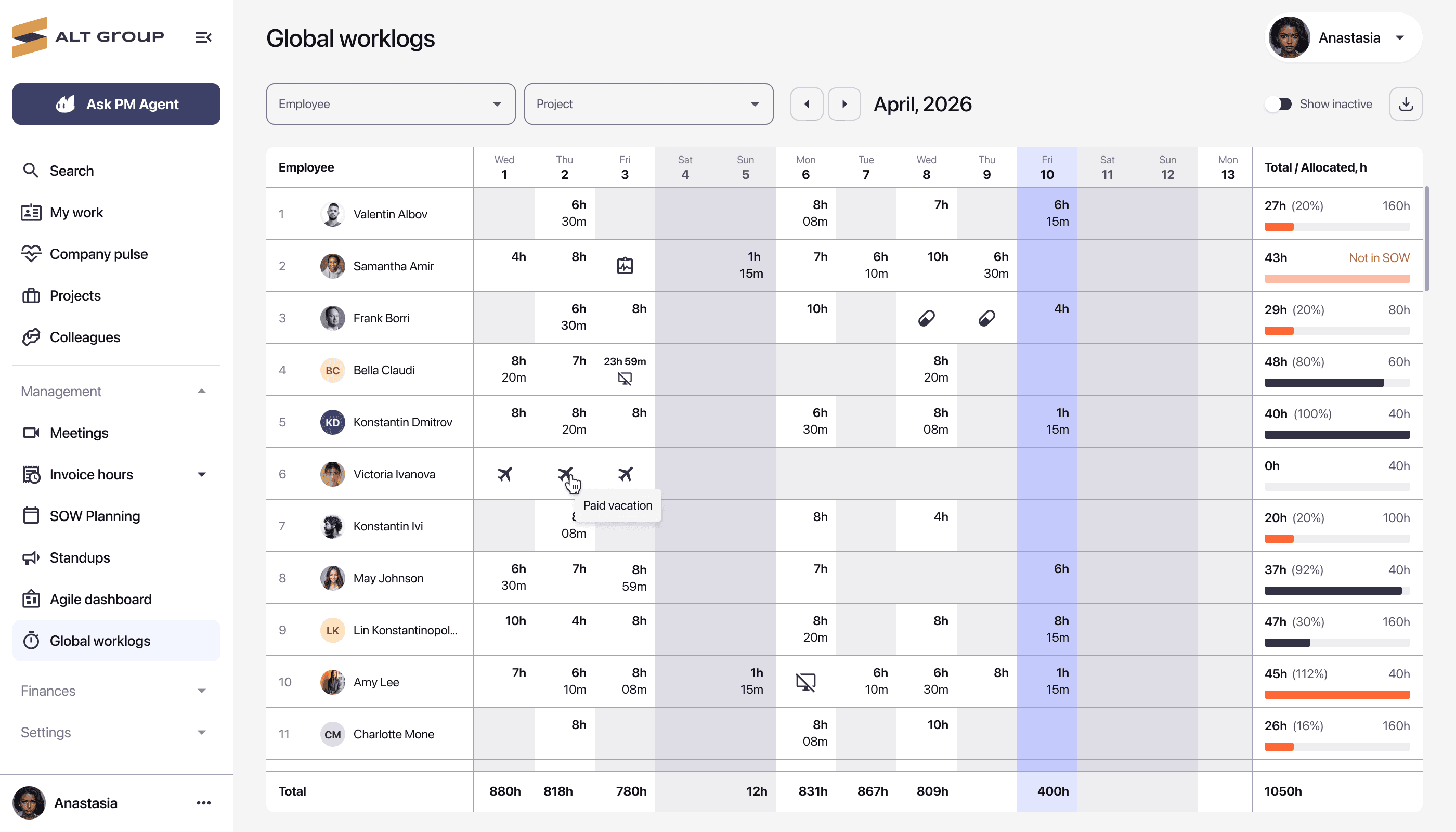
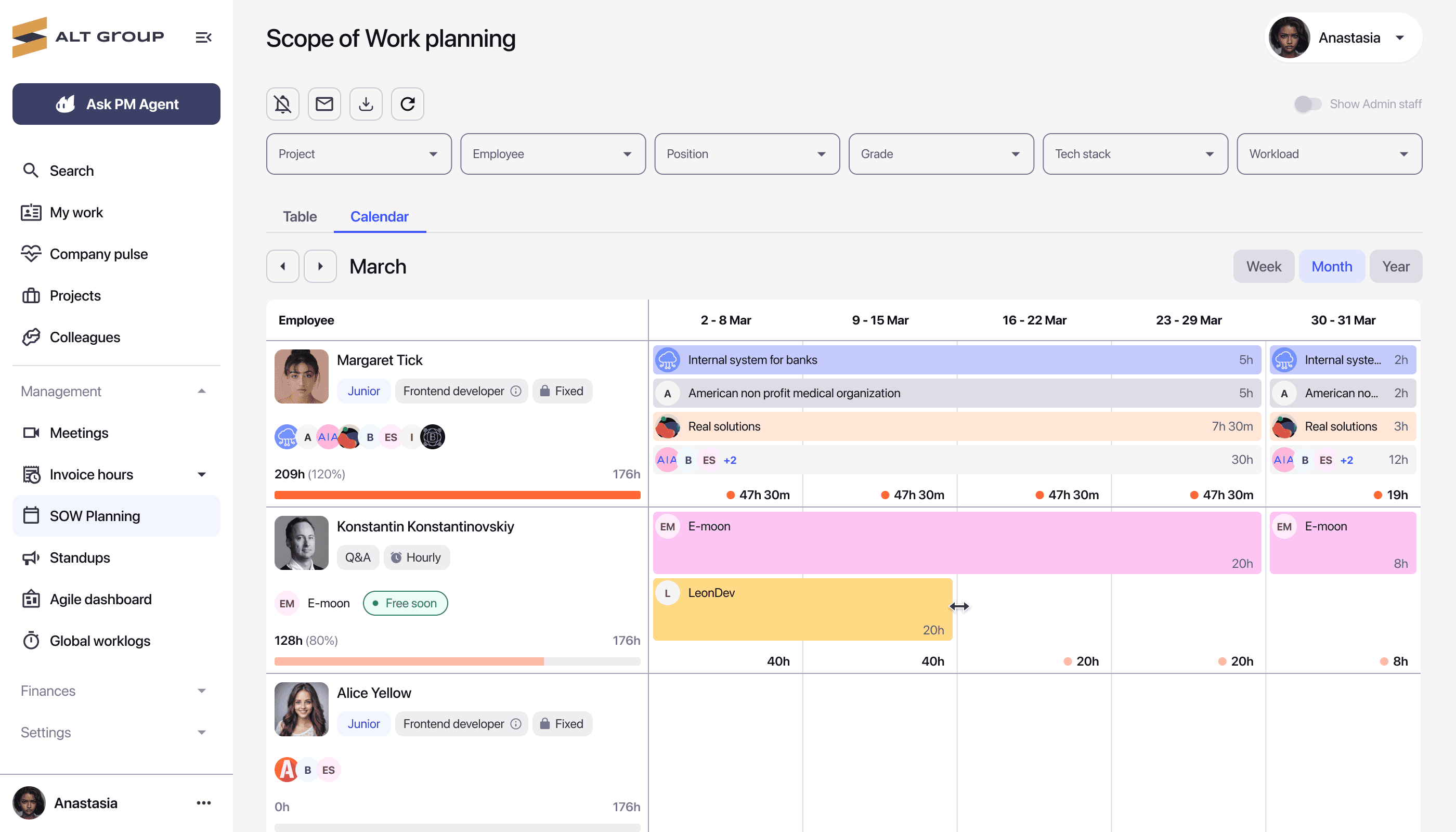
Added a resource planning calendar for workload visibility.
Improved navigation and onboarding flows.
Redesigned data-heavy tables for better readability.
Built an employee profile interface with progress visibility.
Key UX decisions
Small floating chat window with AI reminiscent of e-commerce support
Full-screen AI agent with periodic tasks and analytics output
Made complex analytical workflows possible. Positioned AI as a core product feature
External Google Form for vacation requests
Inline request flow within Absences tab, synced with Calendar & Jira
Removed context-switching; automated HR overhead. Gave employees self-service visibility
Fragmented popup chain with deeply tabbed steps and no way to pause mid-flow
Linear 5-step project creation flow with auto-save at every step
Users could start, pause, and return without losing progress — reducing drop-off and confusion
No design involvement in developer-built features
Design review gate before every release + agent-assisted monitoring for unreviewed changes
Significantly raised output quality. Prevented ad-hoc UI from shipping
540+ hardcoded hex values across 4 conflicting naming schemes in the codebase
Single semantic token system with light/dark support and a shared component library
Accelerated new feature development. Gave users a consistent, coherent visual system
Trade-offs
The backlog never stopped growing. Working at startup speed meant choosing high-impact changes over pixel-perfect polish, and accepting design debt as a conscious decision rather than an oversight. Debt was logged and revisited in dedicated cycles. Navigation improvements and a full UX audit were started but remain ongoing.
Outcomes
3
New clients acquired during the redesign period
13
Features designed end-to-end, from concept to production
540+
Hardcoded hex values unified into one semantic system
5
Project setup steps replaced a fragmented, multi-popup process
Reduced reliance on internal experts to explain the product.
Helped management faster understand project health and team data.
Eliminated manual calendar and Jira updates for absence tracking.
Improved feature quality through design review and validation.
Developed a reusable component library.