Resource planning system
2023 – 2024
An internal platform for one of the largest retailers in Russia, built to automate how IT teams plan project staffing and get budget approved. The system covers the full cycle — from calculating team composition and cost, to routing requests through investment committees and multiple approval departments.
Users include project initiators, heads of competence centers, HR and C&B departments, resource planning teams, and financial approval committees.
Enterprise
Complex systems design
Process automation
Information architecture
UI Design
Multi-stakeholder workflows
Stakeholder interviews
Design mentorship
Agency outsource
Problem
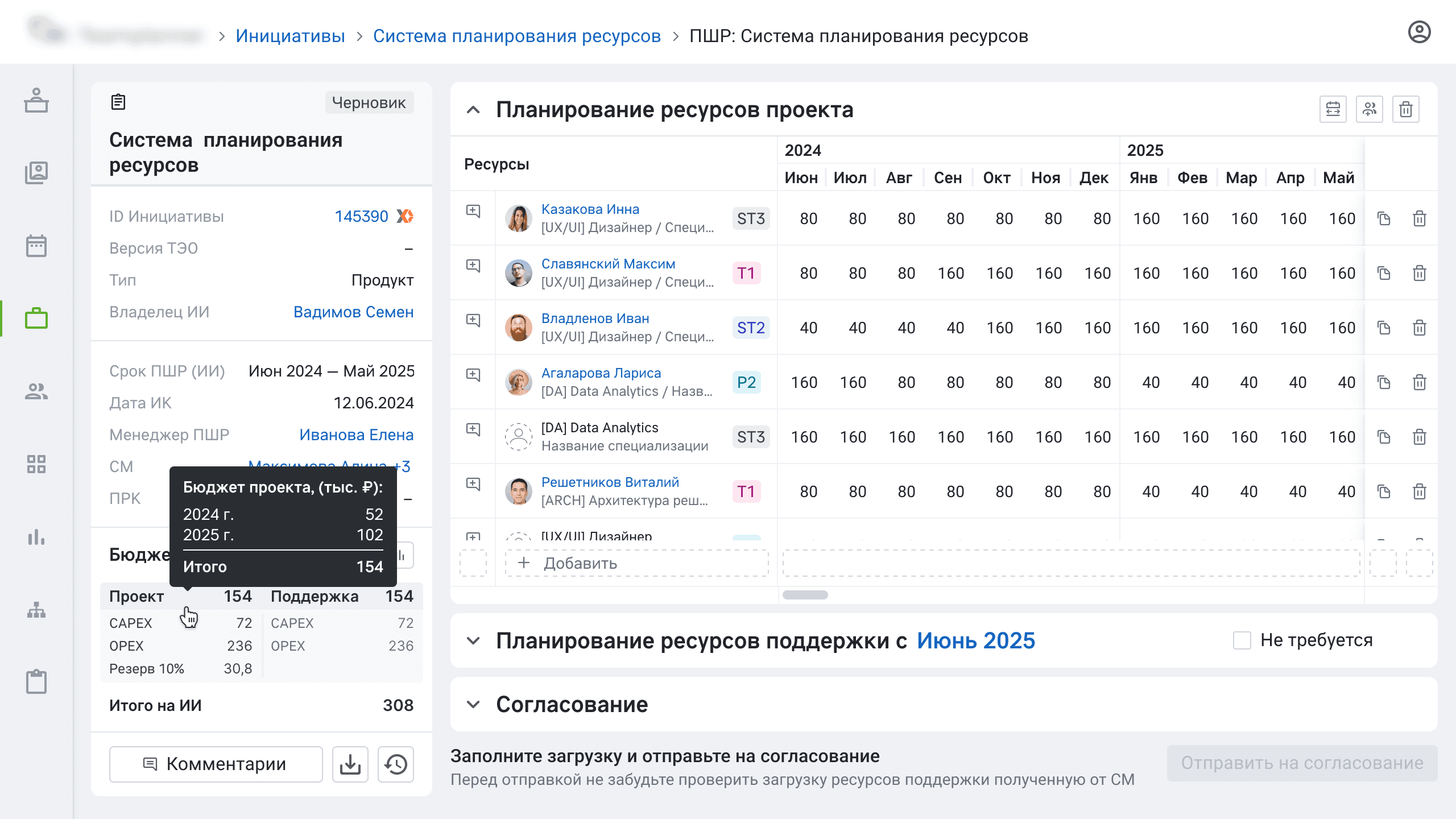
All planning and approval processes lived in email threads and Excel spreadsheets. Employee workload was tracked in Jira, which wasn't flexible enough for a company of this scale. There was no single place to calculate team cost, track availability, or move a request through approvals — every step required manual coordination across departments.
Planning and financial evaluation of a new initiative could take up to 2 months. With investment committee sign-off — up to 6 months. The bottleneck wasn't decision-making. It was the process itself.
Approach
The challenge wasn't to redesign how the company thinks about planning — it was to take an existing paper-based process and make it fast, accurate, and navigable in a single interface.
Three principles shaped the work:
Automate everything automatable — pre-fill defaults, surface patterns from internal directories, support bulk actions for faster operations, reduce manual input wherever possible.
Complexity belongs in the system, not the interface — the approval process involved dozens of abbreviations and internal terms. UI needed to guide users through it without requiring them to memorise the sequence.
Logic over polish — shared component library across products was used as-is to accelerate delivery. Focus was on correct workflows, not visual refinement.
Key work
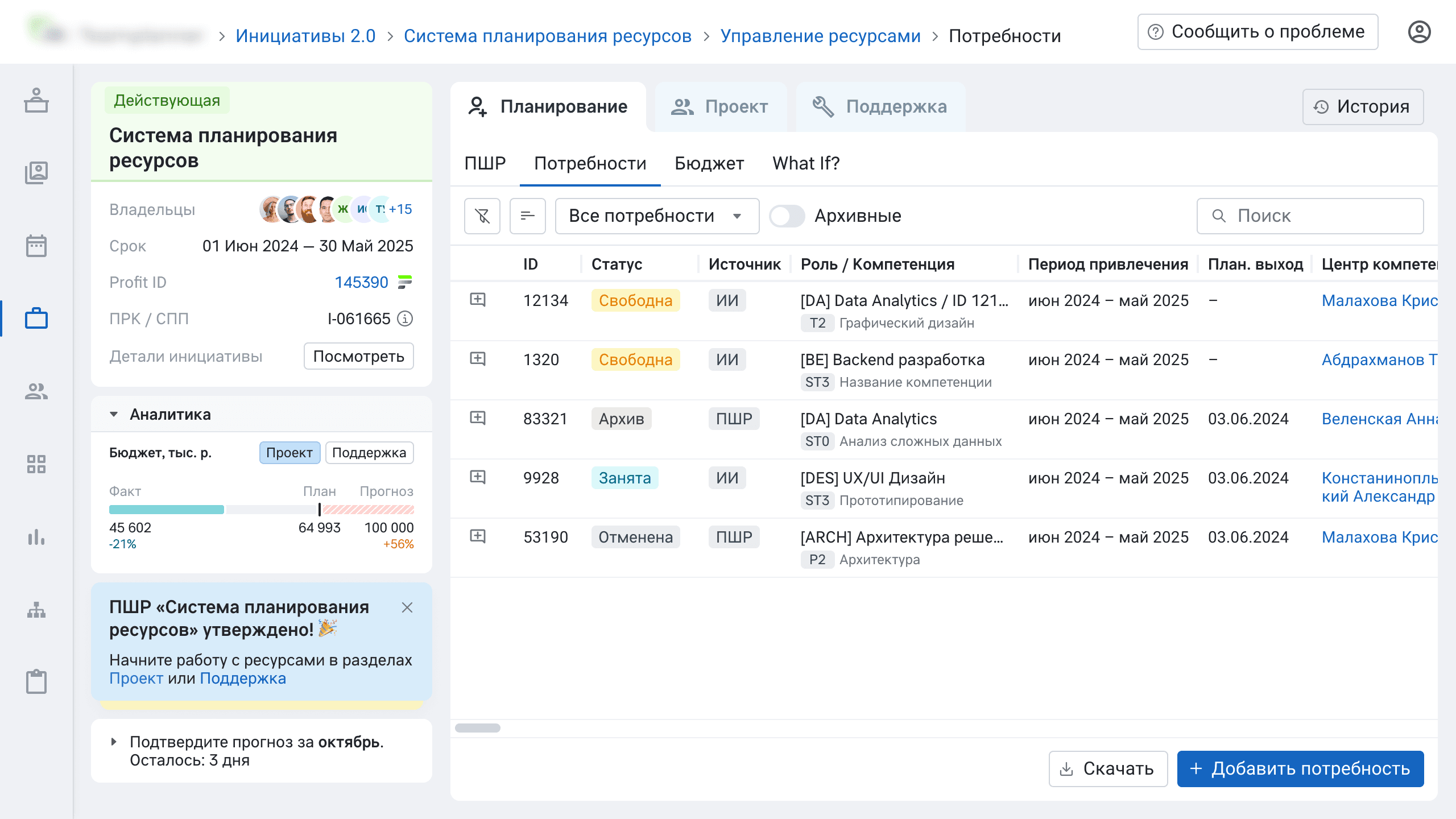
Managing an active project
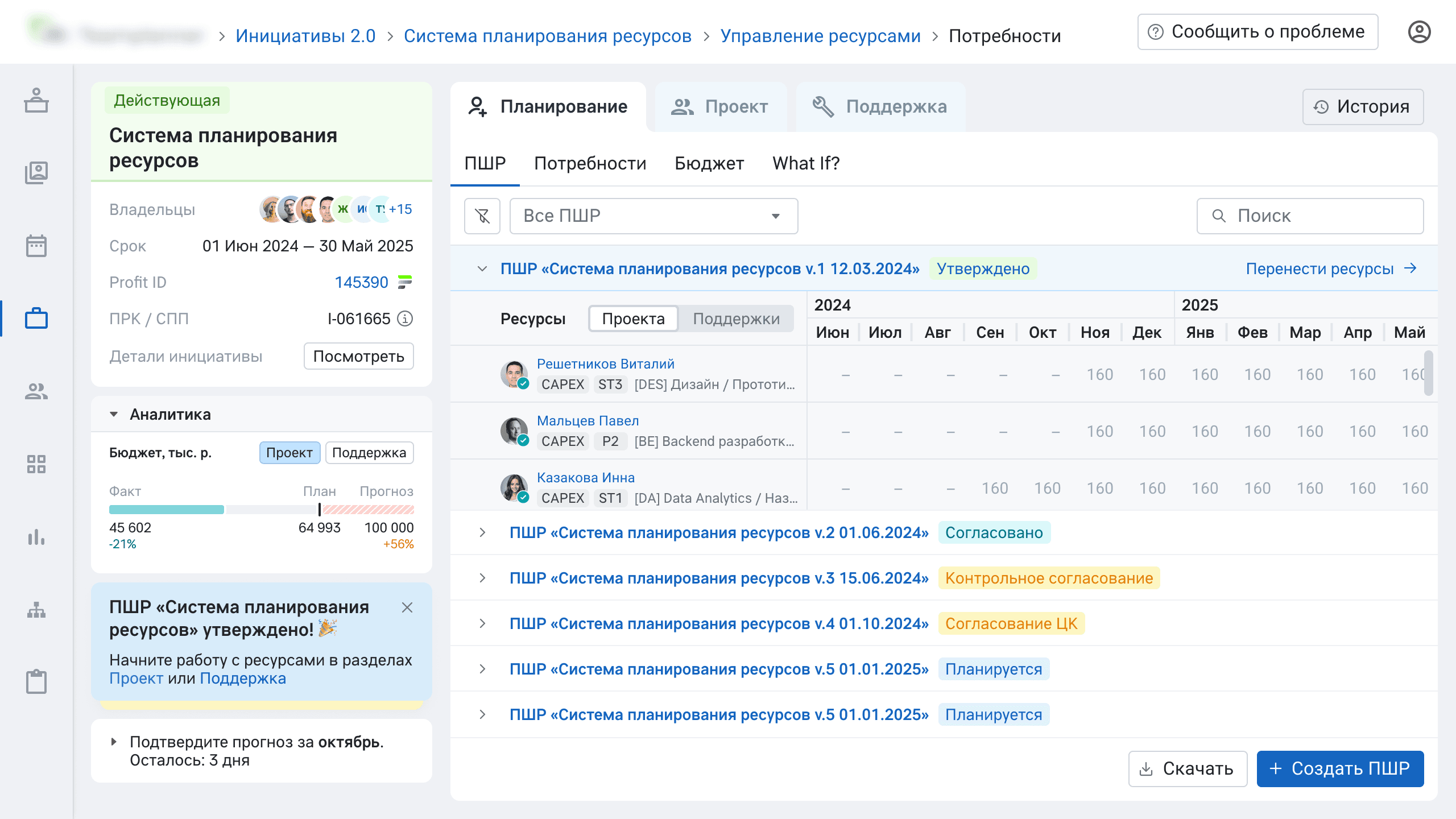
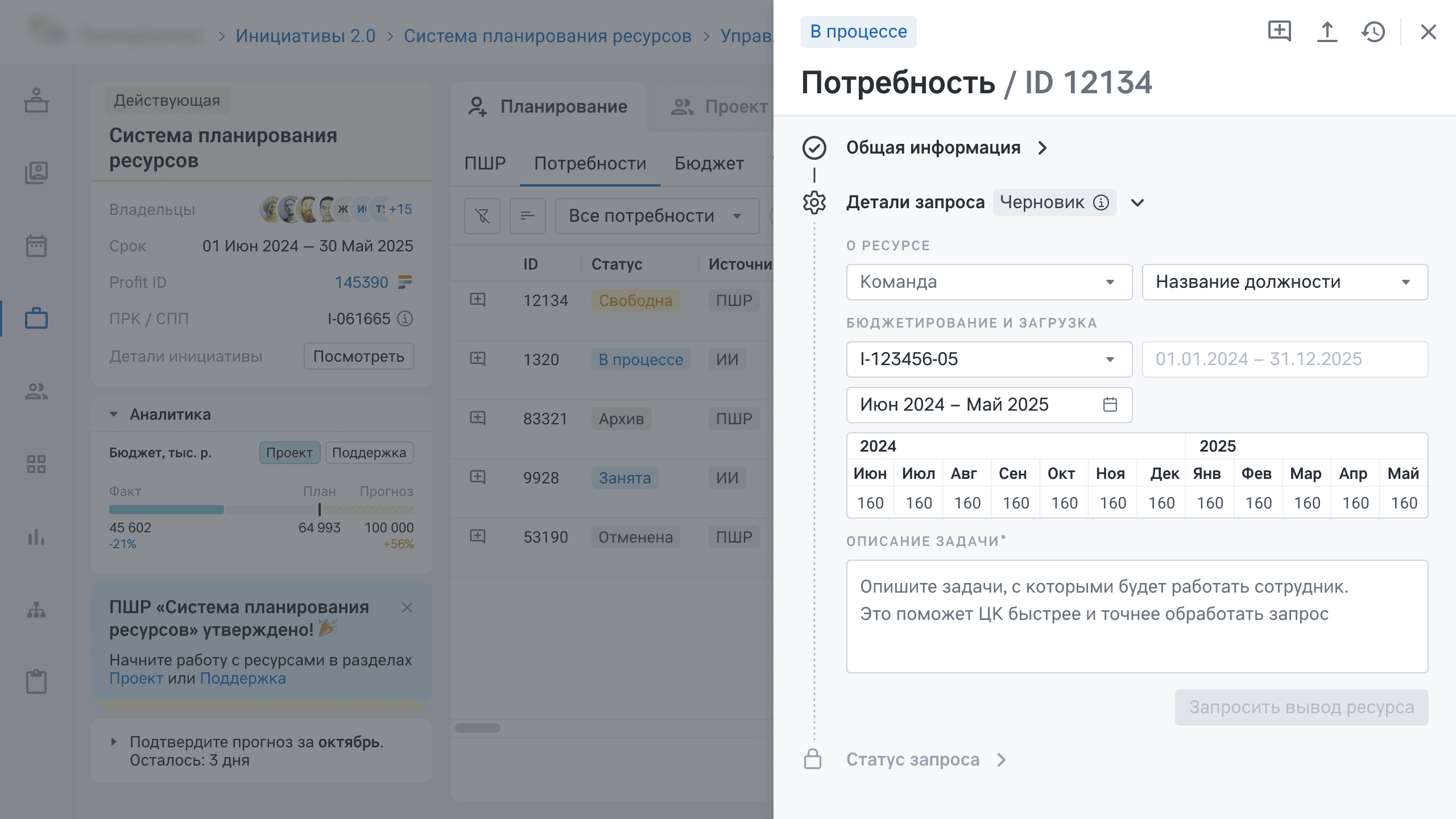
Once a project is running, its team composition keeps changing — people leave, move to other projects, or new roles are needed as scope grows. Designed the full resource management flow for active projects: creating and closing resource requests, tracking whether a need can be filled from existing staff or requires a new hire. Each change routes through the relevant approval steps without restarting the process from scratch.
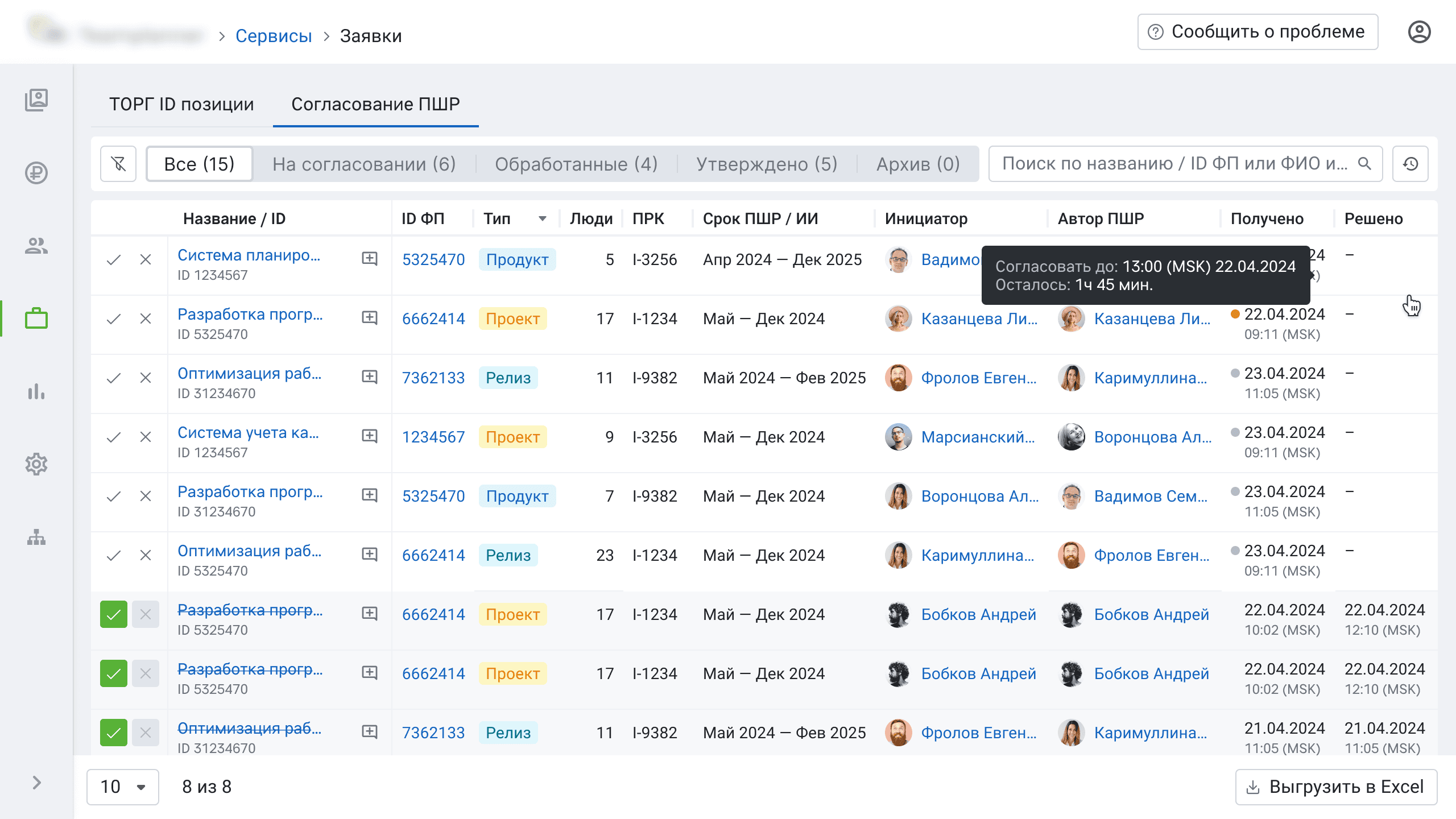
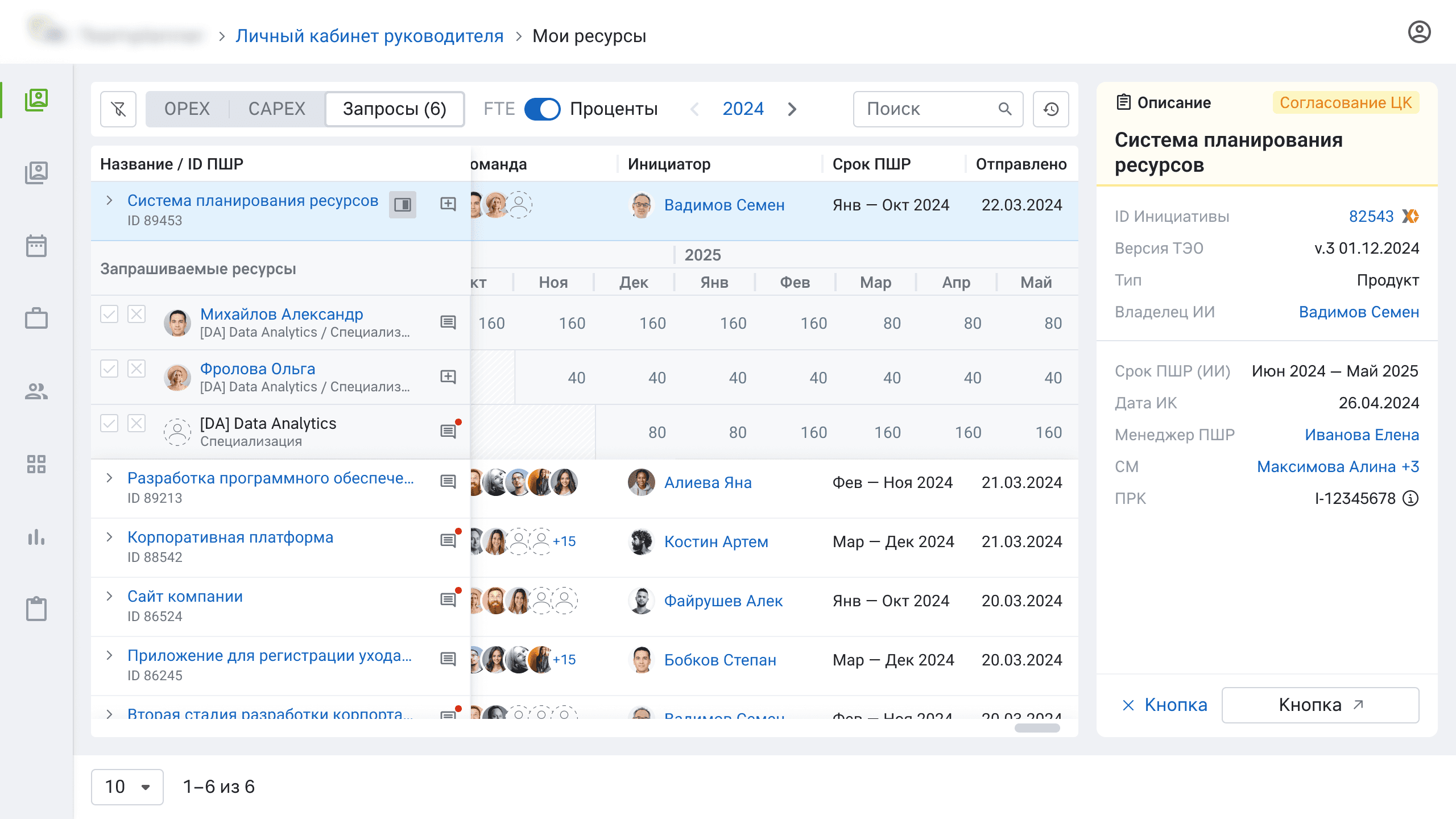
Approver's workspace
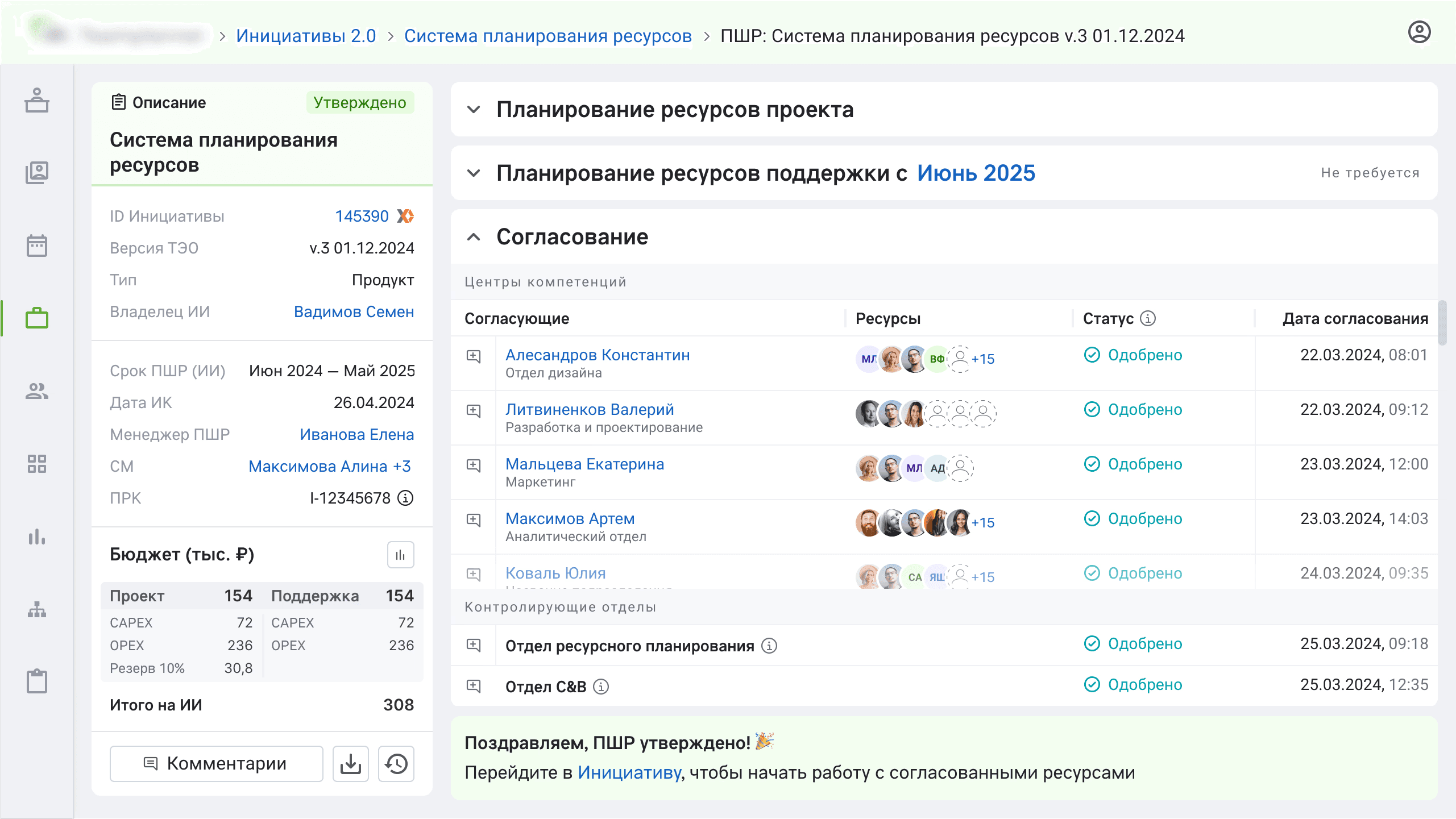
Each participant in the approval chain has their own workspace with tasks relevant to their role — budget sign-off for committees, headcount review for resource planning, candidate selection for HR, cost verification for C&B. Everyone sees only what they need to act on, with full visibility into where the overall request stands.
Key UX decisions
Each team position configured manually — role, grade, specialisation, workload set one by one
Smart defaults and auto-fill based on patterns identified in internal position directories
Reduced time per position; made cost estimation accessible to non-specialists
Process knowledge lived in a glossary of internal abbreviations and in people's heads — extracted through stakeholder interviews together with a business analyst
Step-by-step guided flow with contextual labels, routing logic built in, current stage always visible
Users could navigate a complex bureaucratic process without needing to memorise it
Planning, approvals, HR, and resource management handled in separate tools with no connection
5 interconnected sections covering the full lifecycle in one system
Eliminated cross-tool coordination. Created a single source of truth for the entire process
Trade-offs
Worked within a shared cross-product design system — visual style and core components were standardised across the company's internal tools. New components were built on top of it where needed. No one needed Dribbble-worthy screens. They needed a process that used to take 6 months to take 1.
Outcomes
6×
faster approval process — from up to 6 months down to 1
5
interconnected product sections designed end-to-end
4+
departments moved off email and Excel onto one platform
Project initiators can now calculate team cost and composition in minutes, not days.
Competence center heads gained a single tool for managing and planning their people.
C&B and resource planning departments fully transitioned to the platform.