Protek — Internal operations platform
2022 – 2023
Protek is one of Russia’s largest pharmaceutical companies, operating across distribution, retail pharmacy, and manufacturing. Core processes were spread across disconnected tools with different logic and interfaces, making cross-team collaboration difficult and adding friction to daily work.
The goal was to design a unified internal platform integrating existing services, starting with two key processes: performance monitoring and task management.
Enterprise
UX Discovery & Research
Business process analysis
Client communication
Stakeholder interviews
UI Design
MVP scoping
Agency outsource
Problem
There was no single place where managers could see what was happening across divisions, respond to critical changes, or assign and track tasks. Each tool had its own interface and data format — cross-department collaboration required switching contexts constantly. The fragmentation wasn't just inefficient, it made it hard to act on information quickly.
The company didn't need another tool. It needed one platform that could replace several — without losing the processes that already worked.
Approach
The goal was not just to visualise data, but to turn it into a system that drives action.
The project started with deep discovery — working sessions with the client to map key business processes and understand how work happens across divisions. Together, we defined the MVP scope and focused on the most critical workflows.
Three principles shaped the design:
From data to action — metrics should trigger clear next steps, not just be observed
Surface critical signals automatically — the system detects deviations and initiates response, instead of relying on manual monitoring
One system, multiple roles — the platform supports managers, department heads, and operational staff, each with their own view and permissions
Key work
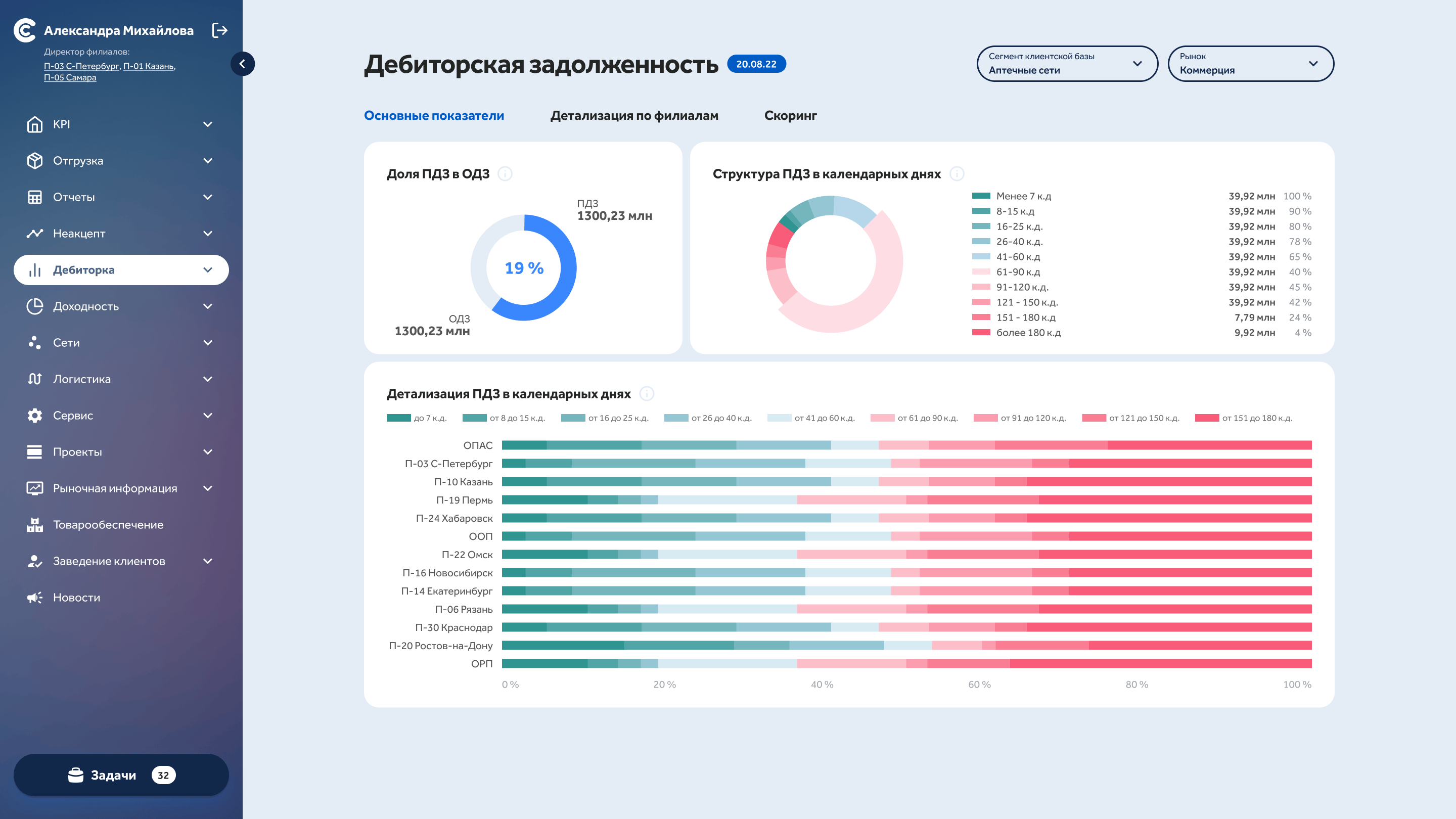
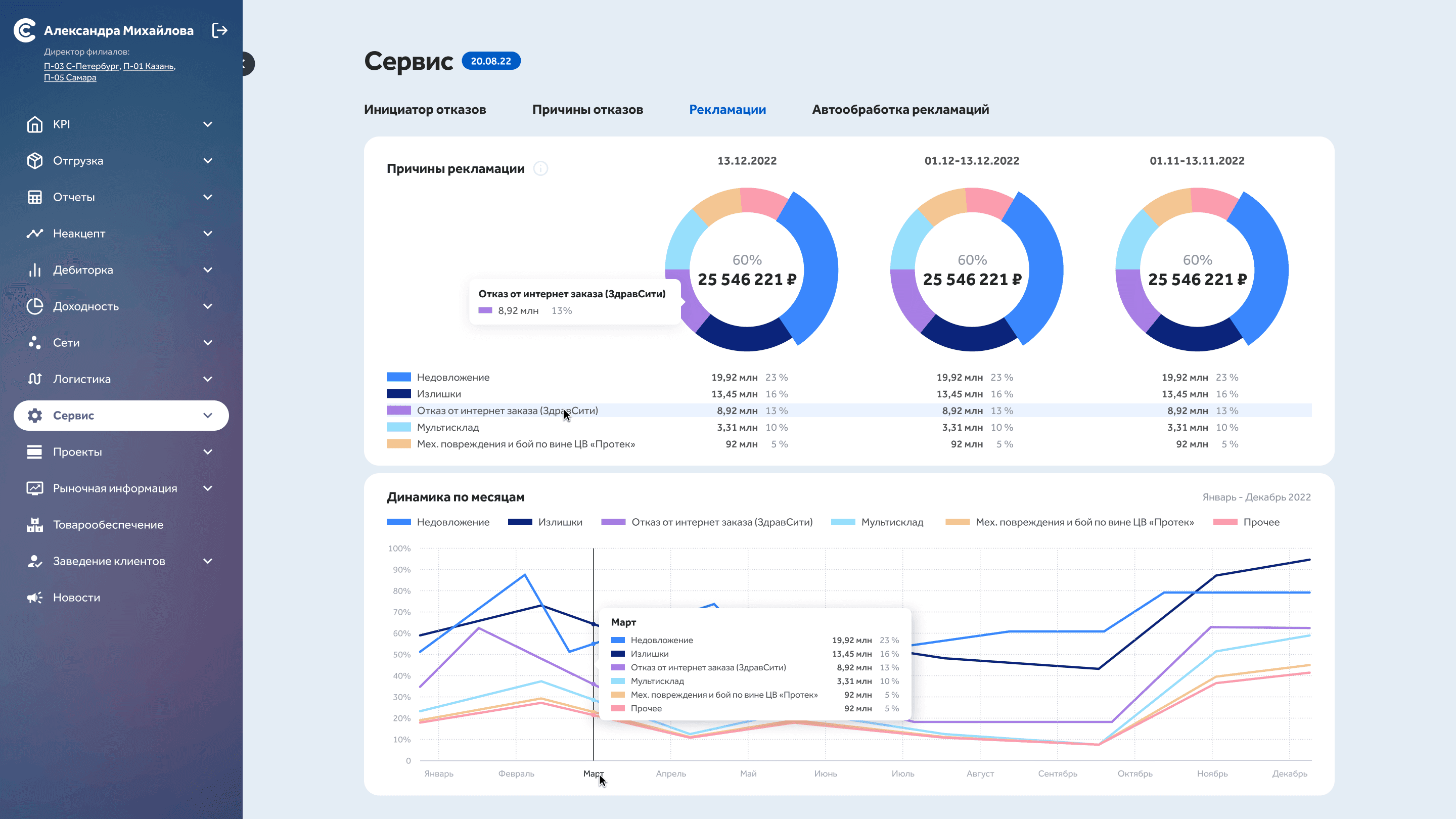
Performance dashboards
Designed role-based dashboards with graphical visualisation of key metrics across sales, logistics, and management divisions. When indicators hit critical thresholds, the system automatically creates tasks for responsible employees — turning a passive monitoring tool into an active response system.
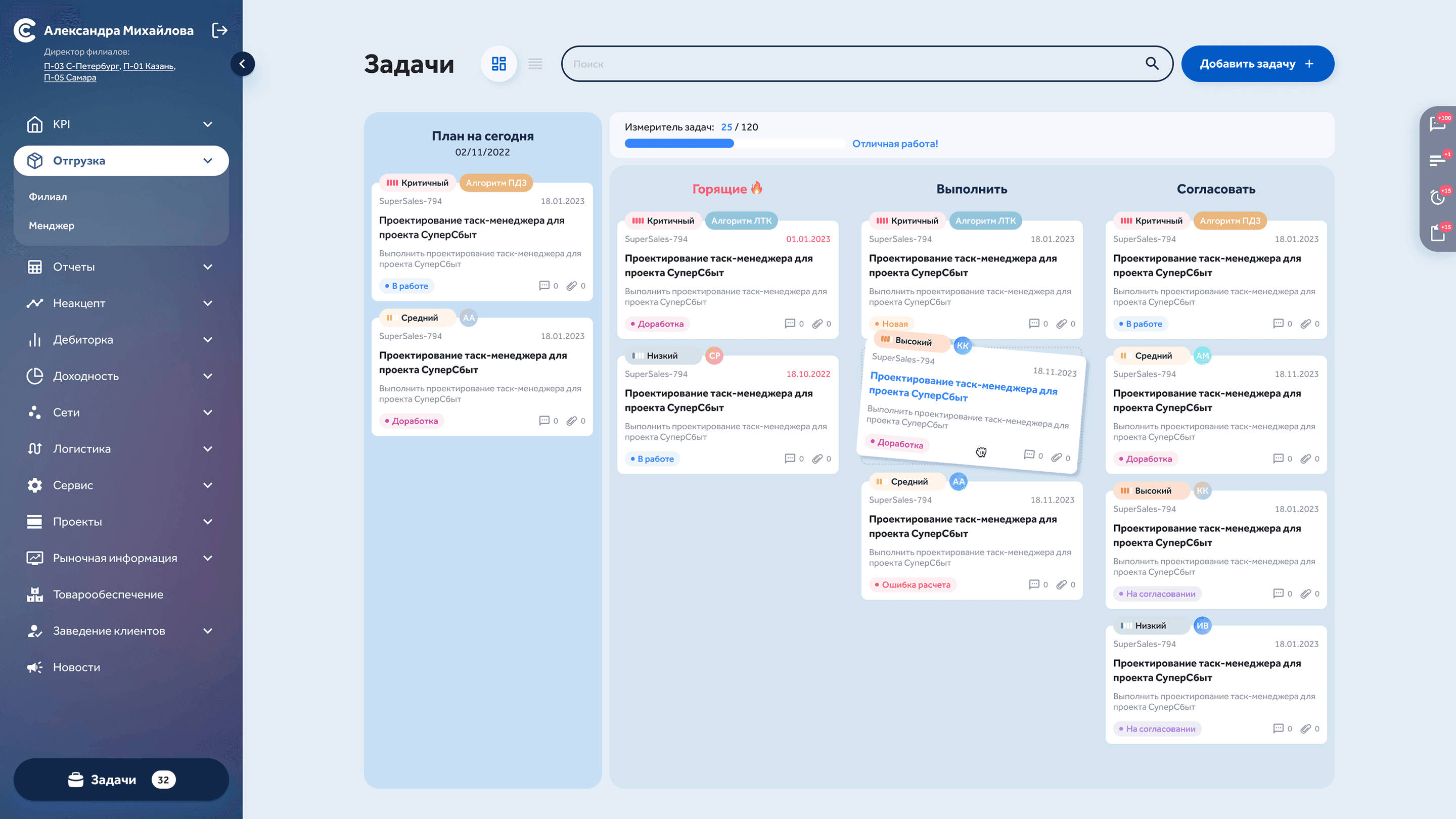
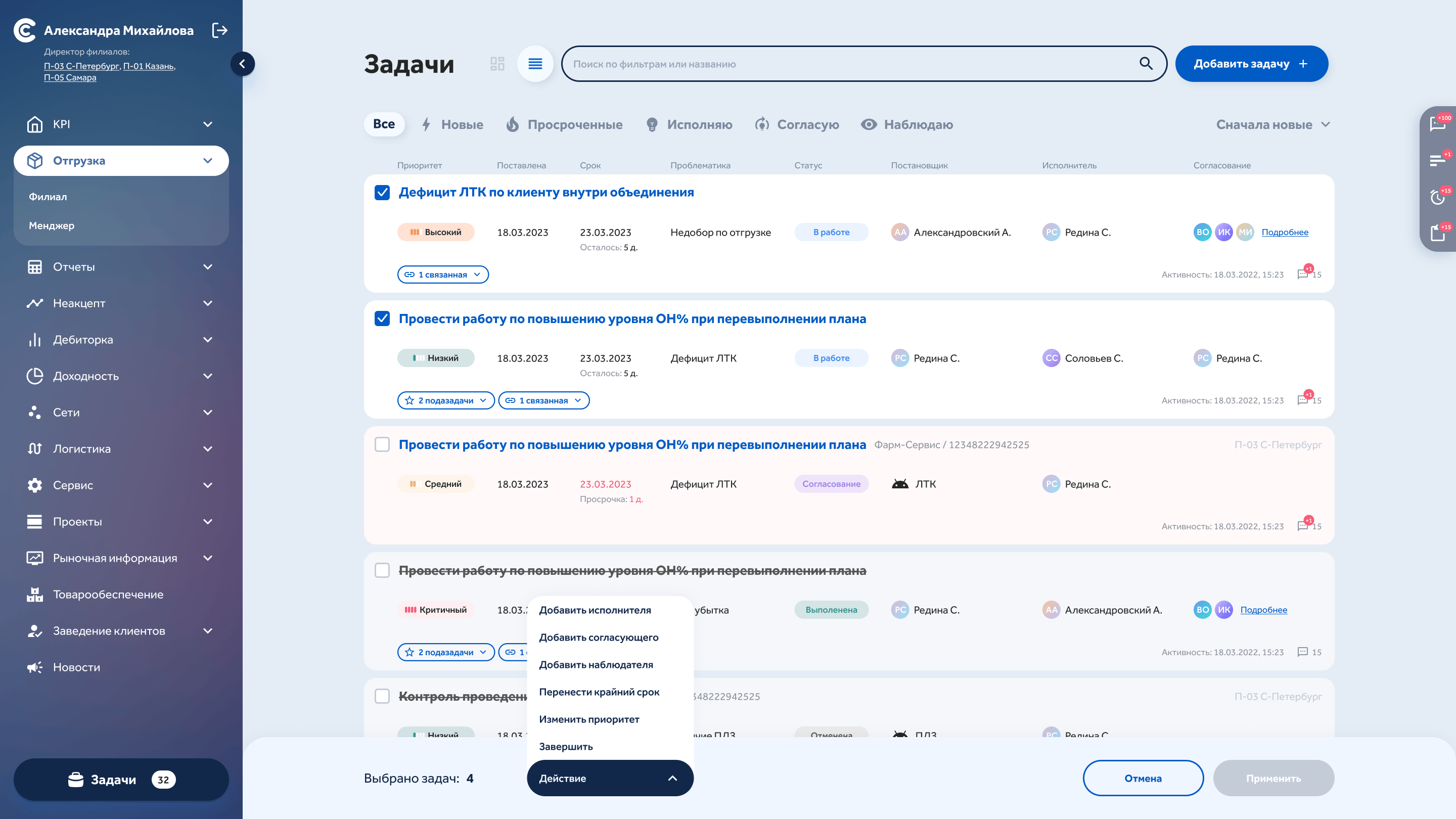
Task management
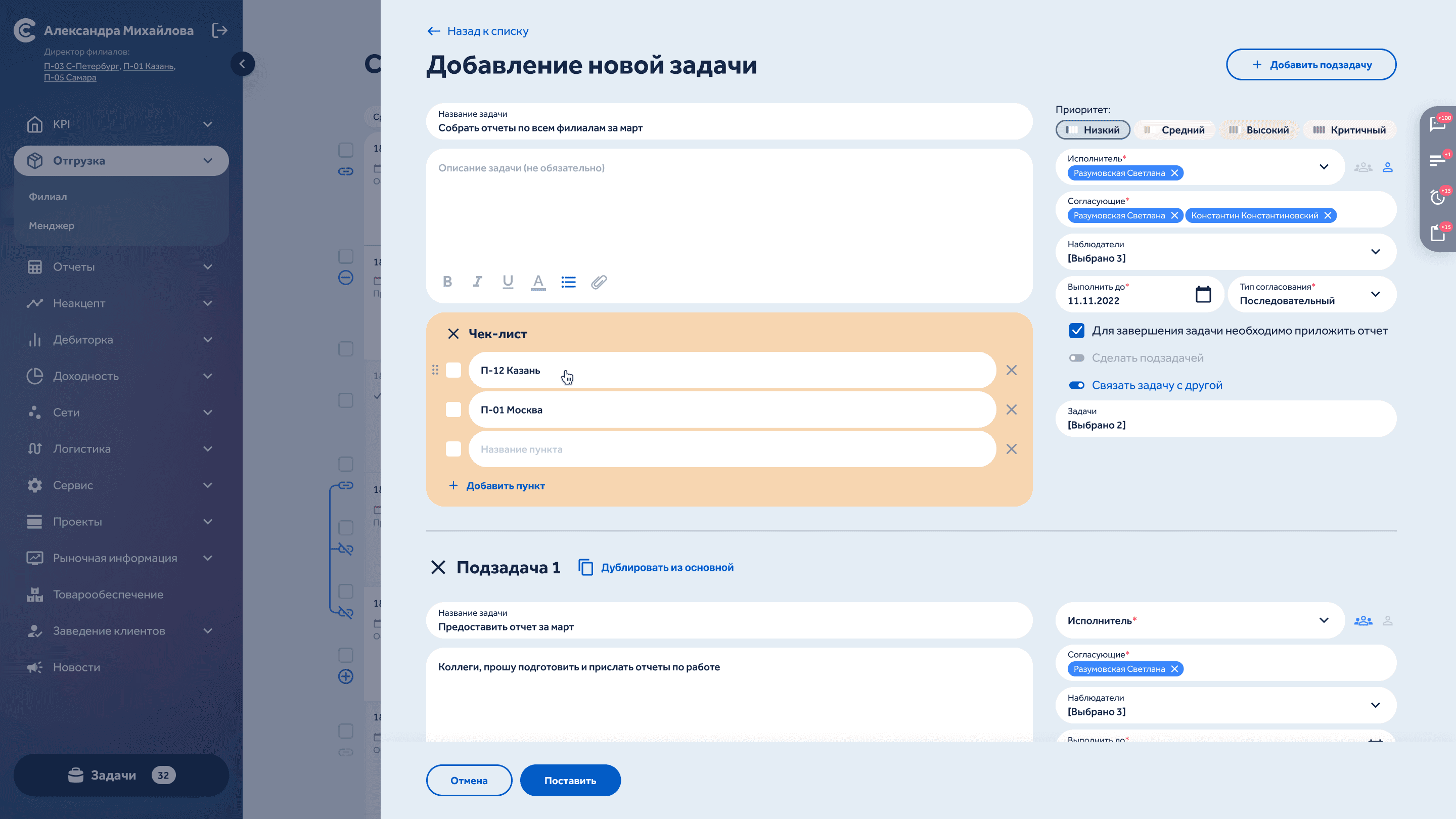
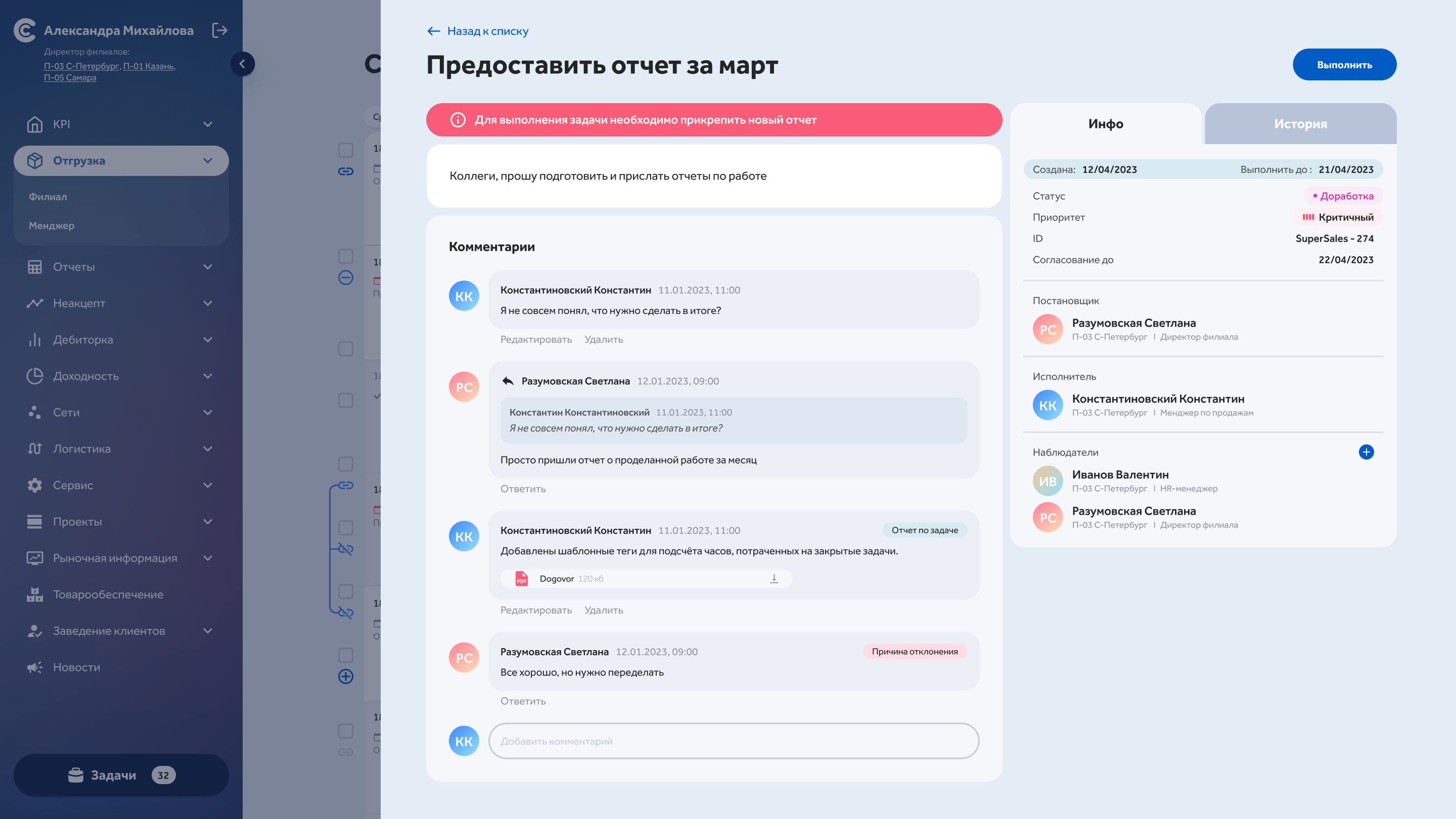
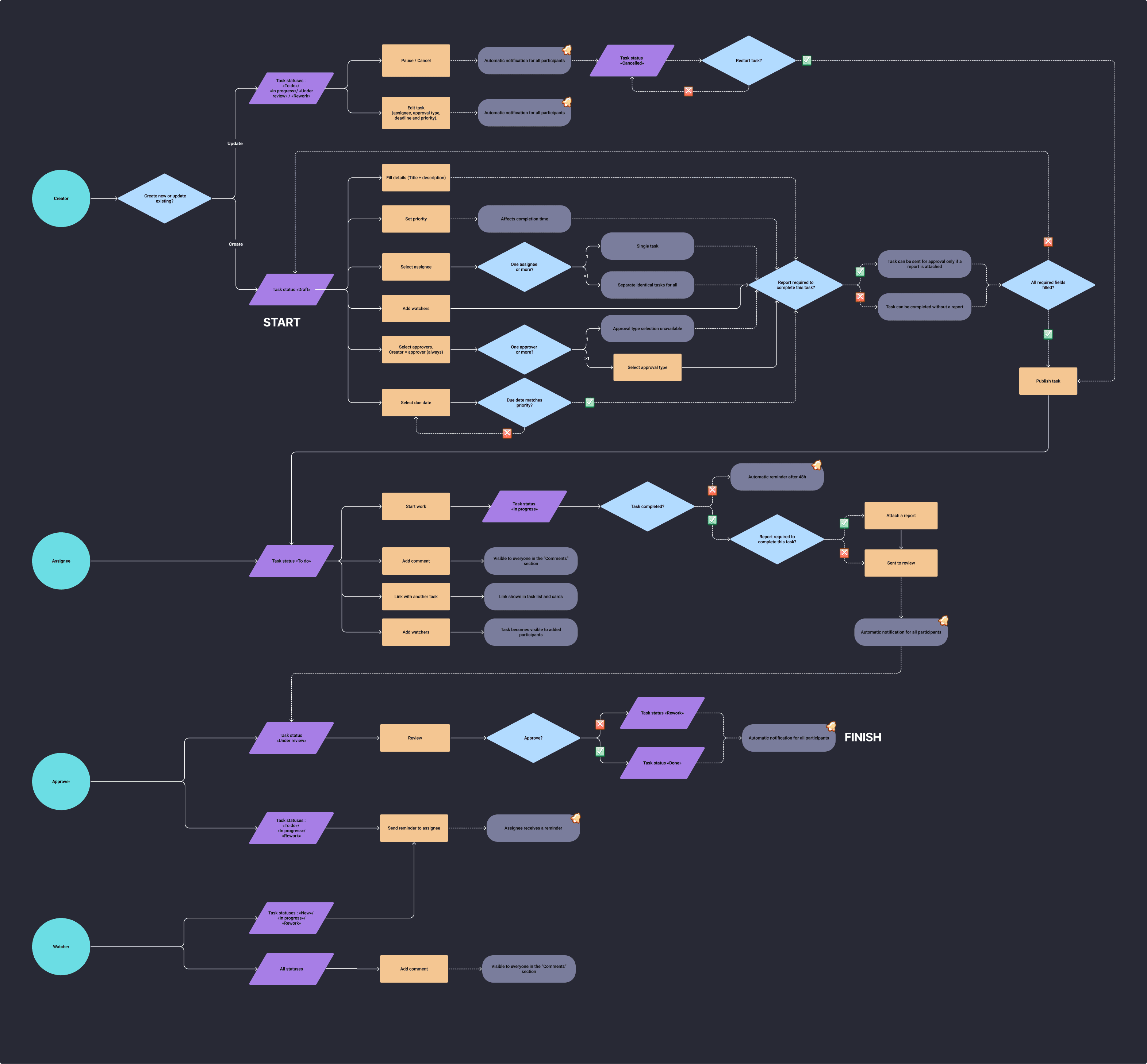
Designed a task system covering both automated tasks triggered by metric deviations and manually created ones. Different task types have different approval routes and response requirements — the flow adapts to the type of work, not the other way around.
Key UX decisions
Managers manually monitor metrics across multiple tools and react when they happen to notice a problem
Automated alerts and task creation when KPIs hit critical thresholds — response is built into the system
Reduced reaction time to critical changes; removed reliance on someone manually catching a deviation
Tasks created and tracked in separate tools with no connection to performance data
Task management integrated directly into the platform — automated tasks link back to the metric that triggered them
Created a closed loop between monitoring and action; gave managers full context when reviewing a task
All employees working in the same fragmented set of external tools regardless of role
Role-based views with tailored interfaces, permissions, and task routes for each type of user
Reduced cognitive load; each user sees only what's relevant to their work
Trade-offs
The MVP scope was deliberately limited to two core processes — performance monitoring and task management. Many others were identified during discovery but deprioritised to keep the first release focused. The platform was designed to be extensible, with integrations to existing systems planned for later phases.
Outcomes
MVP delivered and handed off to the client’s development team.
Reduced manual analysis and daily overhead for managers.
Faster reaction to performance issues through alerts and automated tasks.
Eliminated fragmentation by replacing multiple tools with a unified system.
Introduced clear and consistent action protocols across regions.
Managers can now understand the situation and act without relying on spreadsheets or manual coordination.